

A modern, integrated service covering the design, manufacture, installation, and commissioning of analytical instruments for the petroleum and petrochemical industries.
Product Showcase
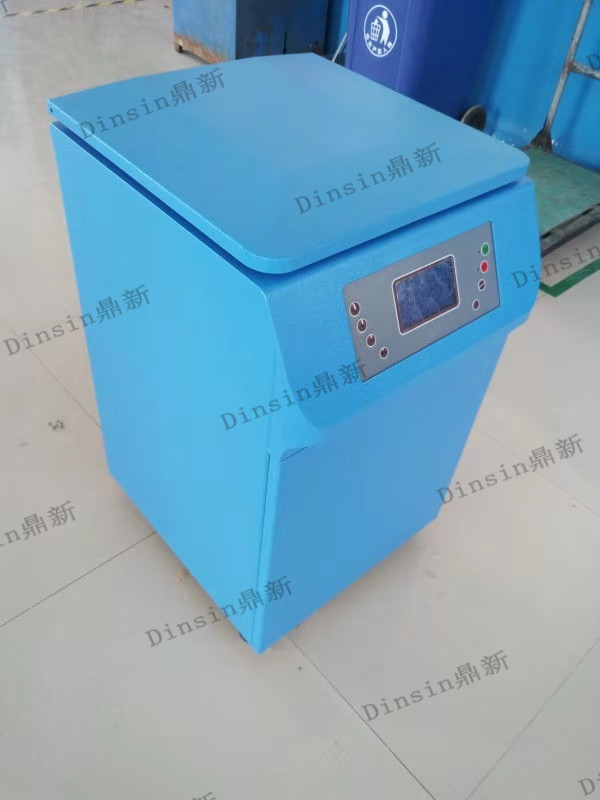
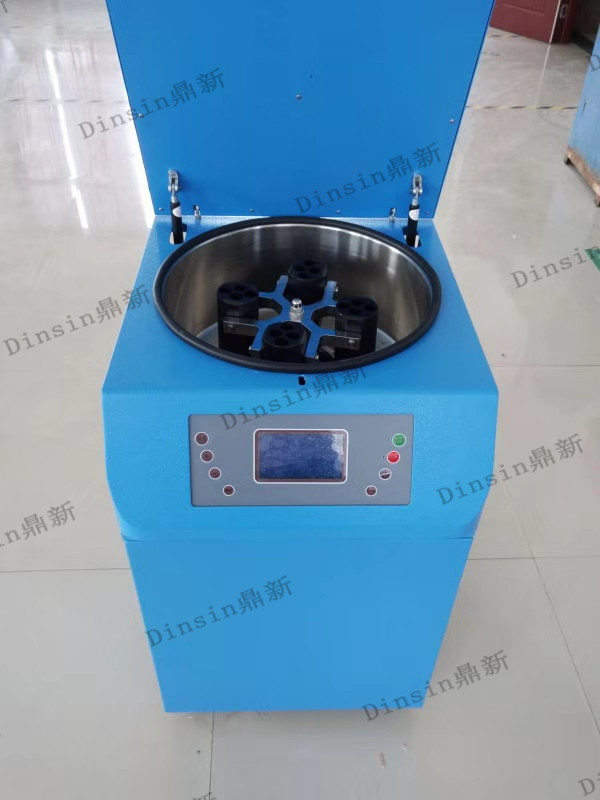
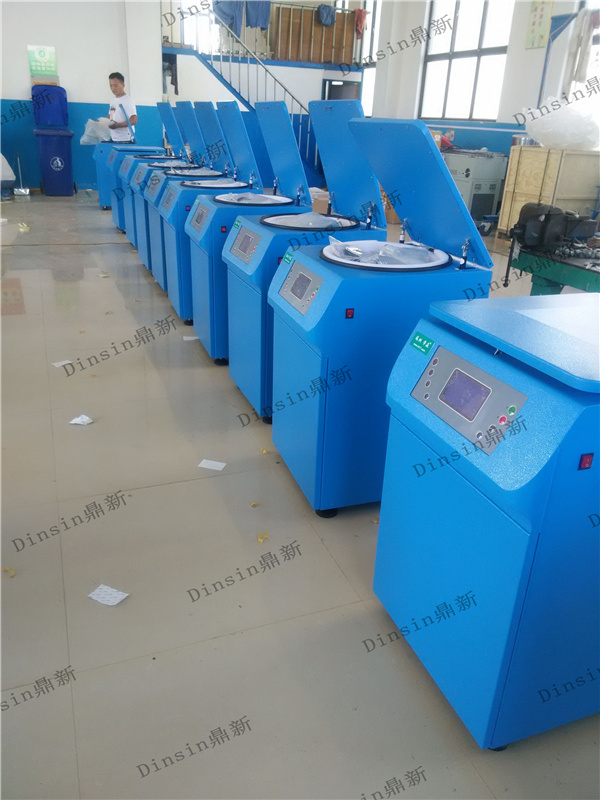
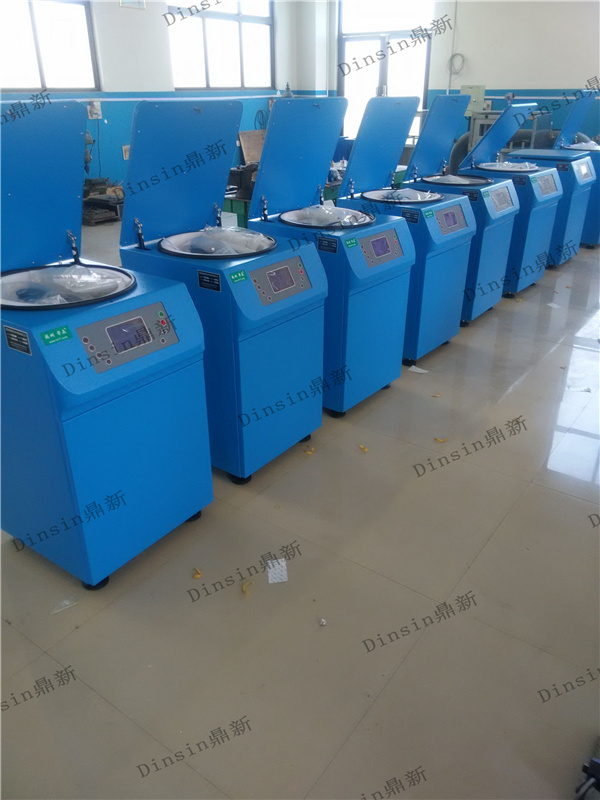
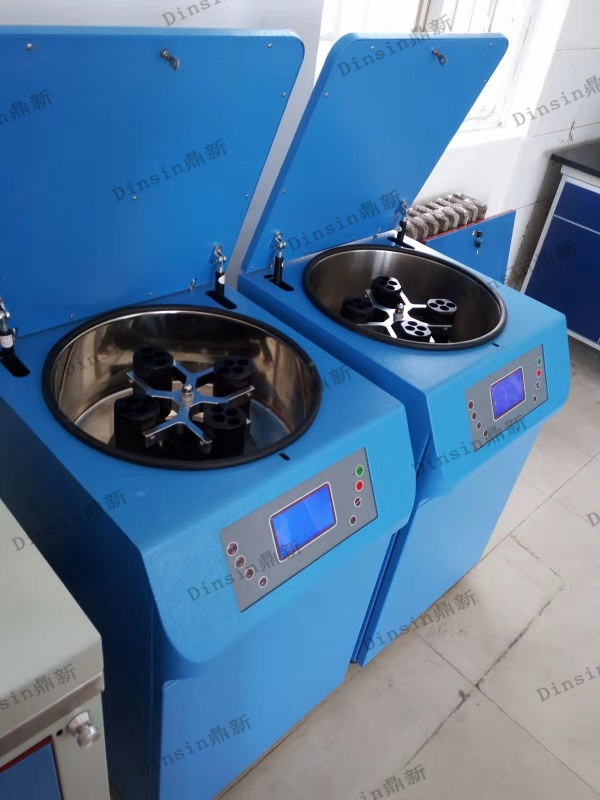
Standard centrifuge
Category:
Crude oil water content tester (centrifugal method)
Keywords:
Standard centrifuge
Tel:
Email:
- Commodity name: Standard centrifuge
- Product Description
- Technical parameters
- Device maintenance and precautions
- Explosion-proof certificate
-
- Commodity name: Standard centrifuge
- Commodity ID: 1354058155406544896
Our company produces a series of centrifuges (crude oil water content testers) designed and manufactured according to the GB/T6533-2012 standard. Widely used in oilfield crude oil water content analysis, they offer advantages such as fast analysis speed, low analysis cost, and high sample throughput. The instrument operation is intelligent, and its vibration and noise levels are superior to similar domestic and international products.
Industrial centrifuges originated in Europe. In the mid-19th century, three-legged centrifuges for textile dehydration and top-hung centrifuges for separating crystallized sugar in sugar factories emerged successively. These earliest centrifuges were all intermittent operation and manual slag discharge. Due to improvements in the slag discharging mechanism, continuous centrifuges appeared in the 1930s, and intermittent centrifuges also developed due to the realization of automatic control. Industrial centrifuges can be divided into three categories according to their structure and separation requirements: filtering centrifuges, sedimentation centrifuges, and separators. A centrifuge has a cylinder that rotates at high speed around its own axis, called a drum, which is usually driven by an electric motor. After the suspension (or emulsion) is added to the drum, it is quickly driven to rotate at the same speed as the drum. Under the action of centrifugal force, the components are separated and discharged separately. Generally, the higher the drum speed, the better the separation effect. The working principles of centrifugal separators include centrifugal filtration and centrifugal sedimentation. Centrifugal filtration uses the centrifugal pressure generated by the suspension under the centrifugal force field to act on the filter medium, so that the liquid passes through the filter medium to become filtrate, while the solid particles are retained on the surface of the filter medium, thereby achieving liquid-solid separation; centrifugal sedimentation uses the principle that components with different densities in a suspension (or emulsion) rapidly settle and stratify in a centrifugal force field to achieve liquid-solid (or liquid-liquid) separation.
Our company's centrifuges (crude oil water content testers) are a series of products designed and manufactured according to the GB/T6533-2012 standard. They are widely used in oilfield crude oil water content analysis, with advantages such as fast analysis speed, low analysis cost, and large sample size. The instrument operation is intelligent, and the vibration and noise technologies are superior to similar products at home and abroad.
Implementation Standards
The application of the following documents is essential. For dated reference documents, only the dated version applies to this equipment. For undated reference documents, the latest version (including all amendments) applies to this document.
GB/T 13384-2008 Electromechanical Product Packaging General Technical Requirements
GB/T 191 Packaging and Handling Marks
GB/T 11606 Environmental Test Methods for Analytical Instruments
GB/T 15464 General Technical Conditions for Packaging of Instruments and Meters
GB/T 6533-2012 Determination of Water and Sediment in Crude Oil Centrifugal Method
GB/T 10901-2005 Centrifuge Performance Test Method
GB 19815-2005 Safety Requirements for Centrifuges
GB/T 28696-2012 Centrifuge Separator Drum Balance Inspection Specification
GB/T 30099-2013 General Technical Conditions for Laboratory Centrifuges
GB 19815-2005 "Safety Requirements for Centrifuges" National Standard Amendment No. 1
GB 4793.1 Safety Requirements for Electrical Equipment for Measurement, Control, and Laboratory Use Part 1: General Requirements
Precautions:
1. Before use, you must carefully read the instructions or operate under the guidance of our company's personnel.
2. The power cord and ground wire must be in good and reliable contact. The configuration is complete at the time of shipment. Please do not change it at will to avoid affecting the machine performance.
3. Before starting the analysis, check whether the sample cups on the sample rack can swing freely.
4. After the instrument is running, it is strictly forbidden to open the box cover. The cover can be opened to take the cup only when the number of revolutions is displayed as zero.
5. Regularly check whether the rotor cap is tightened to prevent accidents.
6. Non-professionals are not allowed to open the rear cover for repair.
7. If it is found that the instrument has excessive noise and vibration during operation, it must be shut down immediately for inspection.
-
Main Technical Parameters:
Main Technical Parameters of Centrifuge (Crude Oil Water Content Tester)Power SupplyAC220V±10% 50/60HzRated Power1500WNoise<60dBMaximum Speed<3000rpmSettable Time0~99 minSample Capacity10ml, 20ml, 50ml, 100ml optionalWeight≈130kgTemperature RangeRoom temperature~80℃Motor Model1KW Direct-connected explosion-proof motorCentrifuge (Crude Oil Water Content Tester) Rotor Parameters Rotor Type Rotor Number Capacity(ml) Maximum Speed(r/min) Maximum Relative Centrifugal Force(xg) Horizontal Rotor No.1 4×500ml 3000 2300 No.2 4×50ml 3000 2300 No.3 8×50ml 3000 2300 No.4 16×20ml 3000 2300 No.5 32×15ml 3000 2300 -
Maintenance:
1. When the machine is not in use, the rotor should be removed to prevent bending of the rotating shaft caused by misalignment of the rotor center.
2. After removing the rotor from the centrifuge chamber, clean and dry it immediately with a neutral detergent to prevent chemical corrosion. Store it in a dry and ventilated place. Do not use non-neutral cleaning agents to clean the rotor. Apply a small amount of lubricating grease to protect the center hole and conical surface of the rotor.
3. If the machine is not used for a long time, clean the centrifuge chamber, wipe it dry, and apply a small amount of lubricating grease to protect the conical surface of the rotating shaft.
4. Keep the centrifuge area clean
-

Customer satisfaction is the standard for testing product quality. Listen to the voice of customers, grasp the needs of customers, define quality standards with customer satisfaction, and do everything possible to improve customer satisfaction and loyalty. Insist on doing things right the first time and strive to provide customers with reliable products and services.
Contact Information
Address: B2 Building, Jiwei Pharmaceutical Industrial Park, Gaoxin District, Heze City, Shandong Province