

A modern, integrated service covering the design, manufacture, installation, and commissioning of analytical instruments for the petroleum and petrochemical industries.
Product Showcase
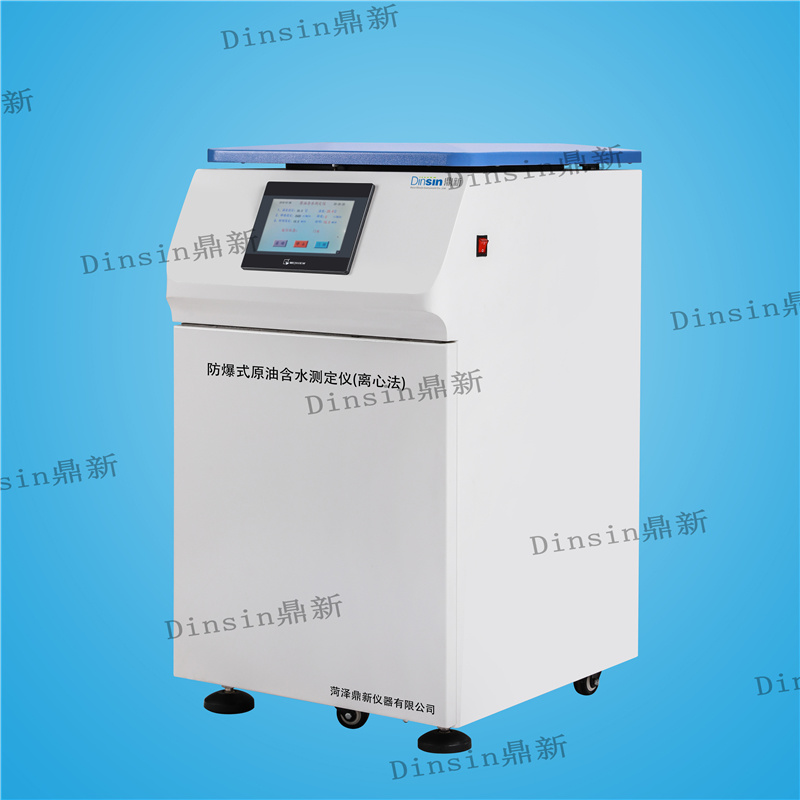
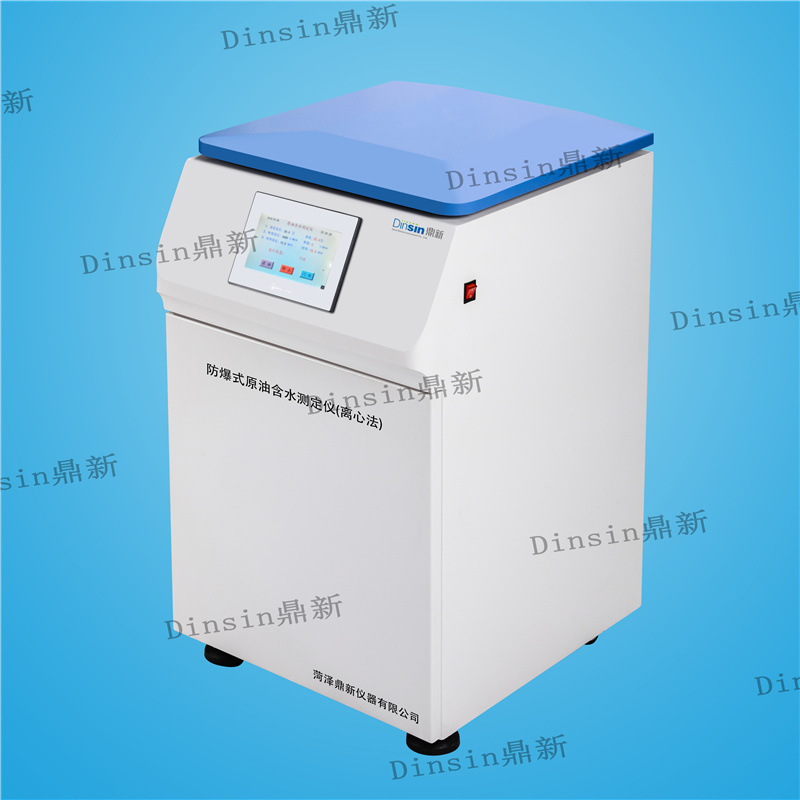
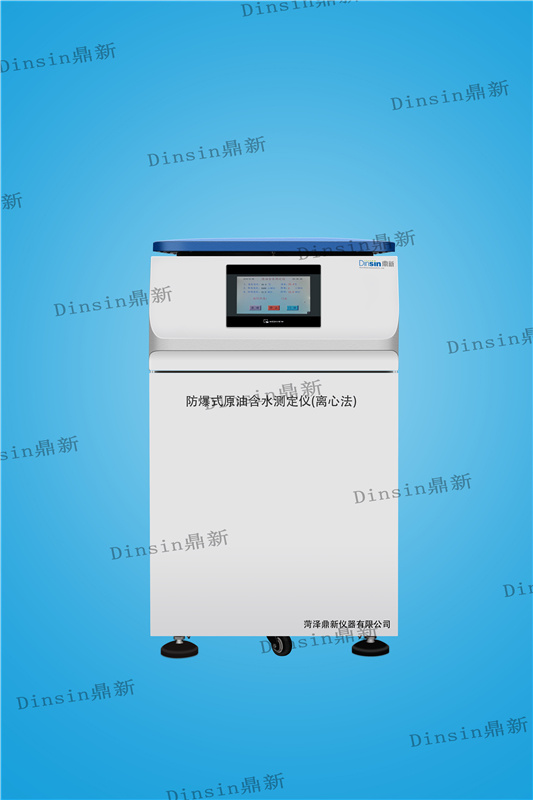
Explosion-proof crude oil water content tester (centrifugal method)
Category:
Crude oil water content tester (centrifugal method)
Keywords:
Explosion-proof crude oil water content tester (centrifugal method)
Tel:
Email:
- Commodity name: Explosion-proof crude oil water content tester (centrifugal method)
- Product Description
- Technical parameters
- Device maintenance and precautions
- Explosion-proof certificate
-
- Commodity name: Explosion-proof crude oil water content tester (centrifugal method)
- Commodity ID: 1354058129779347456
Explosion-proof water content tester (centrifugal method) is a kind of vertical high-speed centrifuge commonly used in the petroleum and chemical industry. This series of centrifuges has the advantages of simple structure, reliable performance, convenient operation and maintenance, and explosion-proof safety. It is widely used in petroleum, chemical industry, medical, environmental protection, scientific research and other institutions.
Since the introduction of centrifuges into China's petroleum industry in the late 1980s, they have been widely used in major oil fields across the country. With the frequent occurrence of safety accidents in the petroleum and chemical industries, there is a high degree of emphasis on the safety of equipment used. Our company specializes in the production of petroleum equipment and has dedicated itself to the research and development of centrifuge equipment. In 2017, we developed and manufactured the FBHSCDQ/10-50 series explosion-proof water content tester (centrifugal method).
Compared with similar products, the explosion-proof water content tester (centrifugal method) uses 304 stainless steel for all parts that come into contact with materials, and all stainless steel outer surfaces are polished. The welds undergo 100% non-destructive testing. The design incorporates a frequency converter and an independent control cabinet (containing a frequency converter, braking resistor, and electrical components) for the electrical and control systems, a directly connected explosion-proof motor, and an explosion-proof button. The control cabinet is installed in a non-explosion-proof area, and an explosion-proof button is provided at the work site. This fundamentally addresses the safety hazards posed by the equipment.
The explosion-proof water content tester (centrifugal method) is a commonly used vertical high-speed centrifuge in the petroleum and chemical industries. This series of centrifuges features a simple structure, reliable performance, convenient operation and maintenance, and explosion-proof safety. It is widely used in petroleum, chemical, medical, environmental protection, and research institutions.
Explosion-proof inspection basis:
GB 3836.1-2010 Explosive atmospheres - Part 1: Equipment - General requirements
GB 3836.2-2010 Explosive atmospheres - Part 2: Equipment protected by 'd' type of enclosure (increased safety)
GB 3836.3-2010 Explosive atmospheres - Part 3: Equipment protected by 'e' type of enclosure (increased safety)
GB 3836.9-2014 Explosive atmospheres - Part 9: Equipment protected by 'm' type of enclosure (intrinsic safety)
Product implementation standards:
GB7779-87 Centrifuge model compilation method
GB10901-89 Centrifuge performance testing method
GB4774-84 Terminology for centrifuges and filter machines
JB 8525-1997 Centrifuge safety requirements
JB/T 8051-96 Calculation standard for centrifuge drum strength
Explosion-proof inspection items:
Overall structure inspection
Maximum surface temperature test
Thermal shock test
Heat and cold resistance test
Impact resistance test
Shell protection performance test
Shell pressure resistance test
Internal ignition non-propagation test
Equipment features:
Compact size, saves space.
All-steel structure, stainless steel centrifuge chamber.
Brushless DC motor drive, smooth and quiet operation.
Touch panel, large screen LCD display.
Parameters can be changed at any time during operation without stopping.
Automatically calculates and synchronously displays the centrifugal force RCF value.
Equipped with a dedicated momentary button for short-time centrifugation.
Multiple sets of program storage space, PLC control, users can freely program and call.
The motor, frequency converter, resistor, and electrical components are sealed in an explosion-proof box, suitable for flammable and explosive environments.
Uses an explosion-proof touch panel, making the equipment safer and more reliable.
Fault self-diagnosis system. When overspeed, loss of speed, overheating, or abnormal opening of the door cover is detected during operation, the machine immediately decelerates and stops, improving instrument safety performance.
Operating instructions:
Precautions for use
A. Before connecting the power
Before each use, carefully check the rotor and centrifuge tubes for cracks or severe corrosion. If any are found, replace them immediately. Keep the centrifuge chamber clean and free of water, and prevent granular debris or other foreign objects from entering. The rotor system must be assembled with the power off. During transportation, the rotor and hanging cups must be removed from the inner bucket and packaged separately. The power voltage used must be the same as the input voltage specifications of the instrument, i.e., single-phase 220V 50Hz, and ensure that the power input terminal has a protective grounding wire.
B. During use
Short-term vibration during acceleration or deceleration is normal and does not require turning off the main power switch or the "stop" button on the control panel. If a power failure occurs or the main power switch is forcibly turned off, do not open the door immediately. Wait until the motor stops (approximately 5-10 minutes) before opening the door. If an imbalance occurs (excessive vibration), the centrifuge will automatically stop and emit a rapid alarm. After 1-2 minutes, turn off the power and open the door to check the cause. After each parameter setting is complete, press the "ENT" key to confirm.
After each centrifugation process, the centrifuge will wait for the user to open the door to take samples. If the door is not opened and centrifugation continues, the instrument will not respond.
C. After use, care should be taken to protect the instrument, especially the rotor and centrifuge tubes, to prevent contamination by acid-base liquids and corrosion.
D. The instrument should not run continuously for more than 60 minutes at a time.
Precautions for the use environment
To ensure the stable and reliable operation of this instrument and its normal function, the following conditions must be met:
Ambient temperature: 0℃~80℃
Relative humidity: ≤80%
Power voltage: 220V±22V, 50Hz±1Hz
Good ventilation, free from dust, flocculent materials, metal shavings, and other debris entering the machine.
Protection against corrosive gases and strong electromagnetic interference.
Use on a stable, horizontal work platform to prevent vibration.
-
Main Technical Parameters:
Explosion-proof MarkEx d e IIB T4 GbRated VoltageAC220V 50HZRated Power1.1KWTiming Range1~99minMaximum Speed5000r/minSpeed Accuracy±25r/minMotor Model1KW Direct-connected Explosion-proof MotorMaximum Separation Factor560/806Maximum Relative Centrifugal Force3370xgTemperature Control Range15℃-25℃Temperature Control Accuracy±2℃Overall Noise≤65dB(A)Output SignalRS485Packaging Dimensions71cm×64cm×100cmExplosion-proof Moisture Determination Instrument (Centrifugal Method) Rotor Parameters
Rotor TypeRotor NumberCapacity (ml)Maximum Speed (r/min)Maximum Relative Centrifugal Force (xg)Angular RotorNo.124×1.5/2.0ml2500064800No.218×10/1.5ml2300060460No.38×50ml2000046420No.44×250ml1600038070No.58×100ml1300019830No.66×500ml1000017700No.74×1000ml800012040ELISA RotorNo.82×2×96-well40002300Continuous Flow RotorNo.91000ml1600028100No.103000ml1000014800Horizontal RotorNo.114×100ml50003370No.124×50ml50002650No.138×10ml40002250 -
Device Usage Precautions:
1. Do not move the device or open the door while it is running.
2. The surface on which the instrument is placed should be firm and level. All four rubber feet should be in contact with the surface and evenly stressed to prevent vibration.
3. The liquid added to the centrifuge tubes should be weighed and balanced. If the difference in liquid addition is too large, it will cause large vibrations during operation. In this case, the machine should be stopped and checked to ensure that the liquid addition meets the requirements. Centrifuge tubes must be placed symmetrically in pairs.
4. If a centrifuge tube breaks during operation, it will cause significant vibration. Stop the machine immediately and handle it.
5. The time interval between stopping and restarting the machine should not be less than 5 minutes to prevent the compressor from stalling and being damaged.
6. After each centrifugation, the rotor must be removed. Otherwise, if it is left on the shaft for a long time, it may rust and become impossible to remove, causing the entire machine to be scrapped.
7. The power supply must have a ground wire.
8. The service life of this machine's rotor is five years. The rotor should be replaced after expiration.
9. All rotors cannot exceed their maximum speed.
Equipment Maintenance and Precautions:
1. Correct usage and proper maintenance help extend the service life of the instrument. Please use it strictly according to the methods in this manual.
2. If the power supply in the working environment is unstable, please install a voltage regulator. The power supply should be reliably grounded.
3. The instrument and environment should be kept clean and dry at all times.
4. Develop specific regular inspection and continuous monitoring systems based on the on-site working conditions;
5. After installation, before powering on, check whether the insulation resistance between the terminals and the shell is normal. Power on only after it is normal;
6. Regularly check whether non-metallic parts are aging to avoid affecting explosion-proof performance;
7. Regularly check whether the wiring is securely connected to avoid affecting the power performance;
8. If a fault is found in the measuring instrument, it must be repaired by a professional.
9. The equipment should be kept clean inside and out. It must be wiped clean during shift changes, and the dirt inside the instrument should be cleaned regularly.
10. The crude oil filter must be cleaned once a month.
11. Tighten all screw threads on the instrument once a month.
12. Listen to the sound frequently to identify any unusual noises.
-
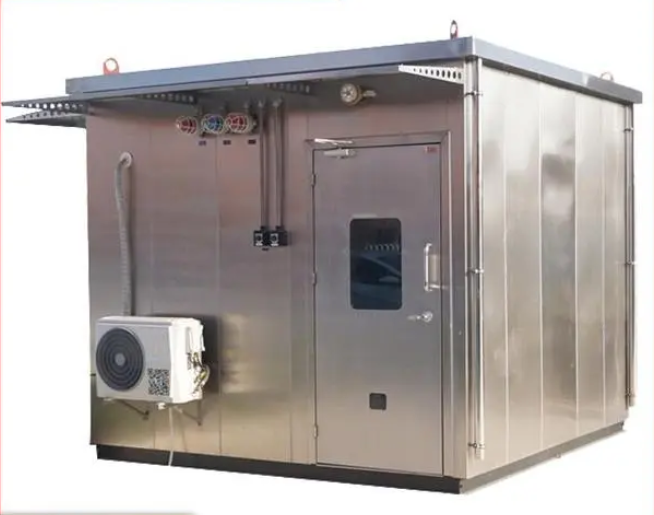

Customer satisfaction is the standard for testing product quality. Listen to the voice of customers, grasp the needs of customers, define quality standards with customer satisfaction, and do everything possible to improve customer satisfaction and loyalty. Insist on doing things right the first time and strive to provide customers with reliable products and services.
Contact Information
Address: B2 Building, Jiwei Pharmaceutical Industrial Park, Gaoxin District, Heze City, Shandong Province