

A modern, integrated service covering the design, manufacture, installation, and commissioning of analytical instruments for the petroleum and petrochemical industries.
Product Showcase
Petroleum density meter
Category:
Petroleum product density meter
Keywords:
Petroleum density meter
Tel:
Email:
- Commodity name: Petroleum density meter
- Product Description
- Technical parameters
- Device maintenance and precautions
- Explosion-proof certificate
-
- Commodity name: Petroleum density meter
- Commodity ID: 1354058136074997760
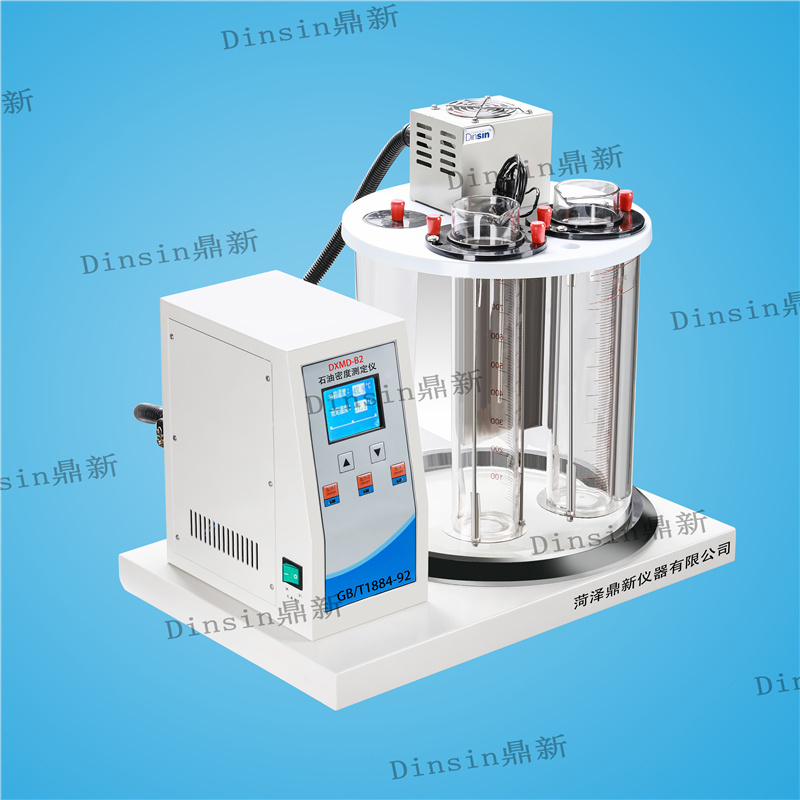
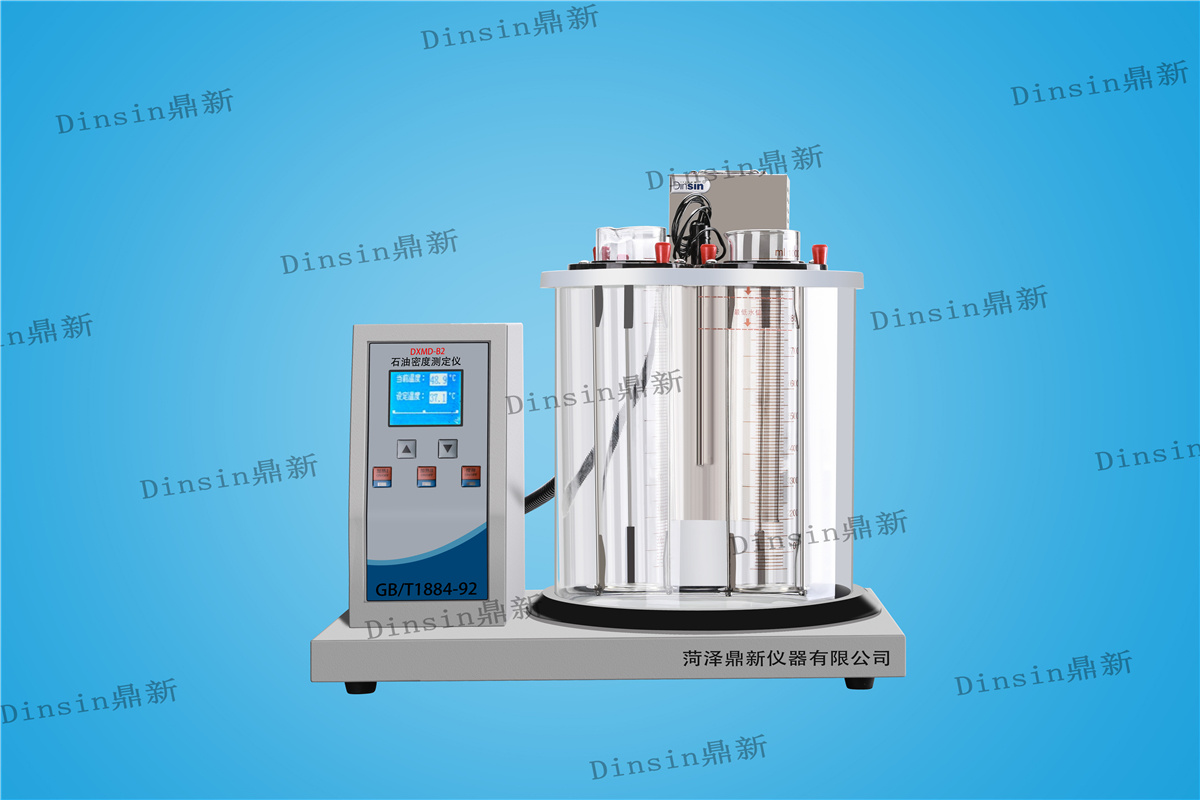
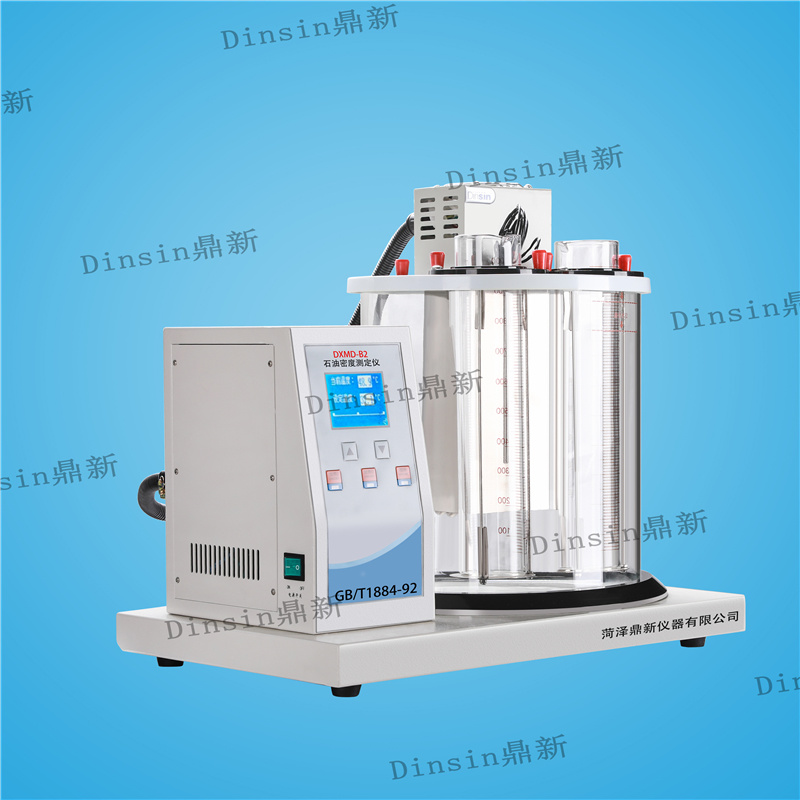
The DXMD-B2 petroleum product density meter is currently the most ideal density meter for petroleum products in China. It is designed and manufactured according to the requirements of the "Determination of Density of Petroleum and Liquid Petroleum Products (Hydrometer Method)" and is suitable for determining the density of crude oil and liquid petroleum products.
The DXMD-B2 petroleum product density meter is currently the most ideal density meter for petroleum products in China. It is designed and manufactured according to the requirements of the "Determination Method of Density for Petroleum and Liquid Petroleum Products (Hydrometer Method)" and is suitable for determining the density of crude oil and liquid petroleum products.
Applicable operating conditions of the instrument:
1. Ambient temperature: -10°C to +40°C. The change in ambient temperature should not exceed ±2°C.
2. Relative humidity: ≤85%.
3. When the instrument is in operation, it should be placed on a flat work surface, and air convection in the environment should be minimized.
4. When not in use, the instrument should be stored in a dry place.
5. The power supply is a single-phase three-wire system and must have a good grounding terminal.
Uses and applicable scope:
1. This instrument adopts an integrated design. The control box uses a user-friendly design, the control switches use a touch-key design, the design is novel, the structure is compact, the operation is comfortable, and the appearance is beautiful and generous.
2. It uses an intelligent LCD display temperature control instrument, which has fast temperature control, fast response, small overshoot, and temperature control accuracy of ±0.2°C.
3. It uses a hard glass tank and an electric stirring device, providing clear sample observation and uniform temperature in the bath.
Instrument structure:
This instrument consists of a bath and cover, an electrical control box, a temperature controller, an electric stirring device, an electric heating device, a density measuring cylinder and its holder, a petroleum hydrometer, and a thermometer.
1. Electric heating device:
It uses a sealed stainless steel tube electric heater to provide sufficient heat source for the constant temperature bath.
2. Electric stirring device:
It uses a 60YN06-2B single-phase asynchronous motor without speed reduction, with an input power of 25W, an output power of 6W, and a speed of 1200r/min; the stirring impeller is Ф50mm (covered by a stainless steel cylinder together with the heating tube), ensuring uniform temperature at the place where the density measuring cylinder is placed in the constant temperature bath.
3. Temperature controller:
It uses an FB532GC type LCD screen digital display temperature controller. The signal of the sensor (with a division number of Pt100) is sent to the temperature regulator, and automatically controls the heating power of the electric heater to the constant temperature bath medium, while displaying the temperature in the bath.
4. Bath and bath cover:
The bath is a hard glass tank that can store constant temperature bath liquid. The cover has two mounting holes for density measuring cylinders and a special clamp for cylinders, allowing for the simultaneous determination of two samples. In addition, if the user needs to determine the sample density at low temperatures, a spare hole is also provided on the cover, through which the user can place a self-provided cooler to lower the bath temperature to meet the low-temperature test requirements.
5. Thermometer:
A fully immersed mercury thermometer with a graduation of 0.2°C, with a temperature measuring range of -20°C to 102°C.
(1) PV display value: Displays the measured temperature or various prompts according to the instrument status.
(2) Shift key:
+: When setting the parameter value, it is used for shifting the set position.
(3) Function key: Modifies the set value, calls out parameters, and confirms parameter modifications.
(4) Temperature control I: 700W heater control key. Pressing this key activates the 700W heater, and the indicator light below the key lights up.
(5) SV display value: Displays the set temperature or the timing time and various parameters according to the instrument status.
(6) Decrease key: Used to decrease the number of the set position.
(7) Increase key: Used to increase the number of the set position.
(8) Stirring: Pressing this key activates the stirring motor, and the indicator light below the key lights up.
Instrument instructions:
1. Pre-test preparation:
1. Before using this instrument, carefully read the instruction manual.
2. Carefully read the People's Republic of China standard GB/T1884-2000 "Determination Method of Density for Crude Oil and Liquid Petroleum Products (Hydrometer Method)", understand and familiarize yourself with the preparation work, test steps, and test requirements described in the standard.
3. Prepare various test instruments and materials according to the requirements of GB/T1884-2000.
4. Check the working status of this instrument, which should meet the working environment and working conditions specified in this instruction manual.
5. Check the shell of this instrument, which must be in a good grounding state.
2. Usage method:
1) Determine the constant temperature bath liquid medium to be used according to the test temperature and inject it into the constant temperature bath. The liquid level of the liquid medium should be higher than the notch on the heating cover (if oil is injected, attention should be paid to the thermal volume expansion) to ensure the upper and lower circulation of the liquid.
2) Connect the stirring motor and temperature sensor and insert them into the bath, connect the power supply, and turn on the power switch and stirring switch.
3) After the power is turned on, the temperature controller enters the working state, the PV display position displays the current bath temperature value, and the SV display position displays the last set temperature value.
4) Select the set temperature value according to the test requirements.
5) Start the temperature control I and temperature control II buttons, the heating tube is energized, and the bath temperature begins to rise. When the bath temperature rises to close to the set knowledge, temperature control II is automatically turned off (1000W is in a non-heating state), and thereafter temperature control I (700W) heating is in a controlled state.
6) The temperature controller is a new generation of high-performance intelligent instrument. The parameters are set at the factory, and the user does not need to reset them. If the temperature control accuracy does not meet the requirements, press the "function key" for 5 seconds to enter the B menu to set or modify the parameters (refer to the "Temperature Controller User Manual" for details).
7) If a deviation is found between the temperature displayed by the temperature controller and the temperature detected by the glass thermometer, correction is required.
First, determine the correction value: When the temperature controller display value is higher than the glass thermometer detection value, the correction value should be negative; otherwise, it should be positive. For example: When the temperature controller displays 80.0℃, and the glass thermometer detects 79.7℃, the correction value is -0.3℃; when the glass thermometer detects 80.3℃, the correction value is 0.3℃.
Then input the correction value: Press the "function key" to enter the B menu, press the "function key", when SV display position shows SC, press the shift key, add key or subtract key to input the correction value. After the correction is completed, press the "function key" to exit the B menu.
8) After the constant temperature bath temperature is stabilized at the required test temperature, rotate the density measuring cylinder special fixture on the bath cover to an angle, then remove it, unscrew the two tightening screws on one side of the fixture, insert the density measuring cylinder (sample has been transferred into it) into the fixture, clamp the density measuring cylinder, lock the tightening screws, then put the density measuring cylinder into the bath, and lock the special fixture and the bath cover by rotating.
9) Insert the thermometer into the sample, carefully stir the sample, and after the temperature reaches equilibrium, vertically place the appropriate petroleum density meter into the sample, let it stabilize, read the reading of the petroleum density meter scale and record the temperature of the sample, and convert it to the density at 20℃ according to the conversion method of the People's Republic of China standard GB/1885.
Precautions:
1. When the bath temperature is below 80℃, a water bath can be used. At this time, the stirring blades on the stirring motor do not need to be changed. When the bath temperature exceeds 80℃ and an oil bath is used, if the temperature control accuracy requirement is not met, the stirring blades need to be modified - remove the heating tube protective cover, increase the angle of the stirring blades slightly to increase the stirring force, and then reinstall the protective cover.
2. The bath liquid must be stirred continuously while heating to ensure uniform temperature in the tank. If the stirring motor does not rotate, check the capacitor first, then check the motor.
3. If there is no display on the PV display position of the temperature controller after the instrument is powered on, unplug the nylon plug of the temperature sensor on the rear panel for inspection. At room temperature, the resistance between the notch of the nylon plug and the pins on both sides is less than 110Ω, and the resistance between pins 8 and 5 is about 69Ω. If the former is open circuit, it indicates that the 100W heating tube is broken; if the latter is open circuit, it indicates that the 700W heating tube is broken. This is used to judge the condition of the heater.
5. If the heating tube is good after inspection but the heating is still slow, check the thyristor installed on the bottom plate of the control box, and replace the thyristor if necessary.
Warning: If the instrument malfunctions, immediately cut off the power supply. Please have a professional repair the malfunction before continuing to use it to prevent accidents!
-
Main technical parameters and indicators of petroleum product density meter:
1. Working power supply: AC 220V±10%, 50Hz.
2. Bath volume: Ф300×330mm.
3. Test tube capacity: 500ml.
4. Heating power: 700W, 1000W.
5. Temperature controller:
⑴ Temperature control range: 0℃~100℃.
⑵ Temperature control accuracy: ±0.2℃.
⑶ Temperature sensor: Industrial platinum resistance, its division number is Pt100.
6. Thermometer: A total immersion mercury thermometer with a scale division of 0.2℃.
-
Device Maintenance and Precautions:
The performance of the equipment is inseparable from proper maintenance, correct operation, and standardized sampling methods, in addition to the instrument's own structure.
Precautions:
● Keep the equipment clean inside and out at all times. Wipe it clean during shift changes and regularly remove dirt from inside the instrument.
● Tighten all threaded connections on the instrument once a month.
● Listen to the sounds frequently to identify any unusual noises.

Customer satisfaction is the standard for testing product quality. Listen to the voice of customers, grasp the needs of customers, define quality standards with customer satisfaction, and do everything possible to improve customer satisfaction and loyalty. Insist on doing things right the first time and strive to provide customers with reliable products and services.
Contact Information
Address: B2 Building, Jiwei Pharmaceutical Industrial Park, Gaoxin District, Heze City, Shandong Province