

A modern, integrated service covering the design, manufacture, installation, and commissioning of analytical instruments for the petroleum and petrochemical industries.
Product Showcase
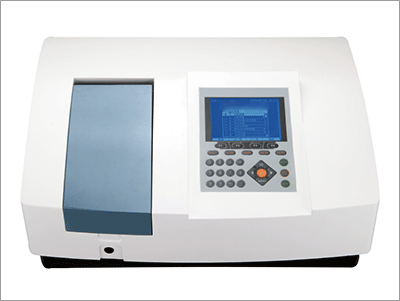
Ultraviolet-visible spectrophotometer
Category:
Ultraviolet-visible spectrophotometer
Keywords:
Ultraviolet-visible spectrophotometer
Tel:
Email:
- Commodity name: Ultraviolet-visible spectrophotometer
- Product Description
- Technical parameters
- Device maintenance and precautions
- Explosion-proof certificate
-
- Commodity name: Ultraviolet-visible spectrophotometer
- Commodity ID: 1354058108459700224
I. Product Overview
The instrument can perform qualitative and quantitative analysis of sample substances in the ultraviolet and visible spectral regions. It meets the requirements of the standard GB/T 26813-2011 for visible spectrophotometers and the standard JJD 1002-1991 for ultraviolet-visible spectrophotometers. This instrument is widely used in medical and health, clinical testing, biochemistry, petrochemicals, environmental protection, and quality control departments, and is one of the commonly used analytical instruments in physical and chemical laboratories. The LCD display and keyboard make the operation more user-friendly.
II. Working Principle
The basic principle of this instrument is that substances in solution, under the excitation of light irradiation, produce an absorption effect on light. The absorption of light by substances is selective. Different substances have their own absorption spectra. Therefore, when monochromatic light passes through a solution, its energy will be absorbed and weakened. , The degree of light energy weakening is proportionally related to the concentration of the substance, that is, it conforms to the principle of colorimetry - Beer-Lambert Law.
T=I/I 0
log I/I 0 =KCL
A=KCL
Where: T —— Transmittance I 0 —— Incident light intensity
I —— Transmitted light intensity A —— Absorbance
K —— Absorption coefficient L —— Path length of the solution
C —— Concentration of the solution
From the above formula, we can see that when incident light, absorption coefficient, and path length of the solution remain unchanged, the transmitted light changes according to the concentration of the solution. The basic principle of this instrument is designed based on the above physical and optical phenomena.
III. Optical Principle
This instrument uses a grating CT dispersion system and a single-beam structure path The continuous radiation light emitted by the lamp is projected onto the monochromator entrance slit by a reflector. This slit is exactly on the focal plane of the condenser and the collimator in the monochromator. Therefore, the composite light entering the monochromator is reflected by the reflector and collimated by the collimator into parallel light, which is then directed to the grating, the dispersive element. The grating diffracts the incident composite light to form a continuous monochromatic spectrum uniformly arranged in a certain order. This monochromatic spectrum is reflected on the collimator. Because the instrument's exit slit is set on the focal plane of the collimator, the spectrum dispersed by the grating is imaged on the exit slit after passing through the collimator using the principle of light focusing. The exit slit selects a monochromatic light of a specified bandwidth, which passes through the condenser and falls on the center of the sample being measured in the sample chamber. After the sample absorbs the light, the transmitted light passes through the light gate and is received by the photocell.
IV. Functions and Features
1. Large-capacity sample chamber, can use 5mm-100mm cuvettes.
2. CT-type monochromator optical path with symmetrical optical performance, better photometric accuracy.
3. Large-screen LCD display (4-digit LCD).
4. The instrument automatically zeros and automatically adjusts the full scale, making operation simple and convenient.
5. Novel design of engineering plastic shell, suitable for any laboratory.
V. Instrument Installation
5.1 Inspection of Accessories
Host One
Power cord One
Accessory box One box (including a box of cuvettes)
Fuse One ( 2A)
Blackbody One (for zeroing)
Instrument operation and use instruction manual One
Packing list One
Product qualification certificate One
Note: If there are any changes to the product accessories, please refer to the product packing list of the instrument.
5.2 Instrument Operating Environment
In order to ensure the normal use of the instrument and to extend its service life, it is necessary to make the instrument in Suitable working environment Working inside Try to avoid operating the instrument at the extreme limits of its environmental conditions.
The instrument should be placed in a dry room with an operating temperature of 5 ℃~ 35 ℃ and a relative humidity not exceeding 85%。
When in use, place it on a firm and stable workbench, and avoid strong or continuous vibrations.
Indoor lighting should not be too strong, and direct sunlight should be avoided.
Fans should not be directed at the instrument to avoid affecting its normal use.
Keep away from strong magnetic fields, electric fields, and high-frequency electrical equipment.
The power supply voltage for the instrument is AC220V ± 22V The frequency is 50Hz ± 1Hz and must have a good ground wire. A regulated AC power supply is recommended to improve the instrument's anti-interference capability Using a power of 500W or more electronic AC voltage regulator or AC constant voltage regulator.
Avoid using in places with corrosive gases such as hydrogen sulfide and sulfurous acid.
5.3 Installation
5.3.1 Before installation and use, the safety of the instrument should be checked, whether the power voltage is normal, and whether the ground wire is firm and reliable. Only after confirmation can the power be turned on and used.
5.3.2 Due to transportation and handling, the wavelength accuracy may be affected. The instrument should be calibrated before use.
VI, Troubleshooting
Fault phenomenon
Cause of failure
Troubleshooting method
1. Turn on the power switch after the instrument does not respond 。
1. Power is not connected.
1. Check the power supply.
2. Power fuse is blown.
2. Replace the fuse.
3. Instrument power switch is faulty.
3. Replace the instrument power switch.
2. Unstable display
1. Insufficient instrument warm-up time.
1. Ensure power-on time 30 minutes.
2. Excessive environmental vibration, excessive airflow near the light source, or strong external light.
2. Improve the working environment.
3. Poor power voltage.
3. Check the power voltage.
4. Poor instrument grounding.
4. Improve grounding.
3. Cannot adjust to 0%
1. The blackbody is not placed or the blackbody position is incorrect 。
1 . Correctly place the blackbody 。
2. Amplifier failure.
2. Repair the amplifier.
4. Cannot adjust to 100%
1. Tungsten Halogen lamp does not light.
1. Check the lamp power circuit.
2. Optical path is incorrect.
2. Adjust the optical path.
3. Amplifier failure.
3. Repair the amplifier.
-
VII. Technical Parameters
Wavelength Range
190nm~1100nm
Wavelength Accuracy
±0.5 nm
Wavelength Repeatability
≤0. 1nm
Spectral Bandwidth
4nm
Stray Light
≤ 0.3%T
Transmittance Measurement Range
0-200%T、-4-4A
Absorbance Measurement Range
0.000A~1.999A
Transmittance Accuracy Degree
±0.5% T
Transmittance Repeatability
±0.2% T
Stability
≤ 0.5%T/3min
Noise
≤0.0004 Abs/h
Bright Current
≤ 0.5%T/3min
Light Source
Imported tungsten lamp
Power Supply AC 220V/50Hz Wavelength and Setting Method Arbitrary setting Working Mode T、A、C、E -
Equipment Maintenance and Precautions:
The performance of the equipment is inseparable from proper maintenance, correct operation, and standardized sampling methods, in addition to the instrument's own structure. Correct usage and proper maintenance help extend the service life of the instrument. Please use it strictly according to the methods in this manual.
The equipment should be kept clean inside and out. It must be wiped clean during shift changes, and the dirt inside the instrument should be removed regularly.
Product After-Sales Service Management System
To meet emergency handling and ensure production needs, strict requirements are placed on after-sales service. There must be an after-sales service department and after-sales management methods. After receiving user quality and service requests, a timely response must be made to provide high-quality and efficient pre-sales, in-sales, and after-sales services to the user unit.
1. Warranty and Measures Commitment
•For products and systems, within the warranty period, if quality problems occur, they will be repaired, replaced, and installed free of charge according to the "Three Guarantees" principle.
•1-year warranty. When the company receives a fault repair report, it will respond within 2 hours, and technical personnel will arrive on-site to maintain the instrument within 24 hours.
•After the free maintenance period, long-term preferential technical services should be provided, including technical support and technical consultation for relevant personnel.
2. Service Guarantee Measures
2.1 Strictly implement the national "Three Guarantees" policy
2.2 Free service within the warranty period
Users can submit service applications to the technical service center and various technical service stations through various methods, such as: telephone, fax, letter, E-mail, or visit. The technical service center is manned by a dedicated person,
After work hours, users can directly call the contact person's mobile phone to ensure that user problems can be responded to promptly at any time.
2.3 On-site Service
After receiving a product failure notification or special service request, within 2 hours, a response will be made, and technical personnel will arrive on-site within 24 hours. For faults that cannot be temporarily resolved and affect the normal use of the user, free replacement products must be provided until the problem is resolved.
2.4 Customer Consultation
If users encounter related problems that need consultation during use, the following methods are available:
Call the technical service center hotline: Professional answers are provided by technical personnel.
2.5 Provide long-term technical consultation services
Customers can contact the company for technical consultation at any time through various flexible communication methods such as telephone, fax, letter, and email. Our company will, according to the specific needs, contact customers by telephone, E-mail, or assign technicians to communicate directly with customers to satisfactorily resolve user issues.
2.6 Post-warranty service
For the sake of our users, our company promises that after the product warranty expires, only material fees will be charged for products beyond the warranty period, and no service fees will be charged.
To ensure the provision of high-quality after-sales service, a supervision and complaint telephone number must be provided, and it is guaranteed that the user's complaint will be responded to within 2 hours. A strict supervision and management mechanism is implemented for the technical support and after-sales service provided. If the user is dissatisfied with the supplier's technical service personnel or does not provide services according to the contract, or provides services that do not meet the standards, they can directly call the supervision telephone number. In this case, the supplier should arrange a more senior technical service personnel, until the company's responsible leader arrives on-site to satisfactorily resolve the problem.
Supervision telephone number: Technical service center
During the quality assurance period, if any of the following situations occur, material fees and repair fees will be charged depending on the situation.
1. After the warranty period of one year ;
2. Failure to present the product warranty card or inconsistency with the content of the product warranty card;
3. Damage caused by failure to use the product according to the operating procedures and environment indicated in the user manual;
4. Damage caused by unauthorized disassembly, expansion, or modification;
5. Damage caused by repairs by non-professional technicians ;
This quality assurance certificate is only applicable to mainland China.

Customer satisfaction is the standard for testing product quality. Listen to the voice of customers, grasp the needs of customers, define quality standards with customer satisfaction, and do everything possible to improve customer satisfaction and loyalty. Insist on doing things right the first time and strive to provide customers with reliable products and services.
Contact Information
Address: B2 Building, Jiwei Pharmaceutical Industrial Park, Gaoxin District, Heze City, Shandong Province